






















The cruel earth: Work to be done

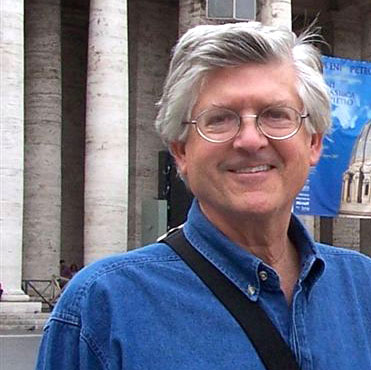
Note: The Icon welcome Ron Lora as a regular columnist. Lora, a native of Bluffton, Ohio, is retired from the history department of the University of Toledo, where he continues to teach part time. He is the author or editor of several books and the recipient of teaching awards at the university and state levels. A past president of the Ohio Academy of History and of the Swiss Community Historical Society, he is active in several organizations. One of his greatest joys is hiking, preferably in dramatic environments such as the Grand Canyon, Yosemite and other national parks.
The cruel earth: Work to be done
By Ron Lora
In a Haitian city flattened by a 7.0-magnitude earthquake, the haunting sounds and horrific images of destruction and death: a mother with child, her breast torn off...children wail, caught in the rubble...a silent survivor, with an eye out of place, the other staring out in shock...thousands of bodies decomposing in the tropical heat, later to be unceremoniously dumped in a truck on its way to a mass grave.
These images recall the afflictions of Job: "How can I know the reasons for it?" a witness asks. For others, such massive destruction washes away belief in God's benevolence.
An understandable notion. Easy answers no longer carry weight in such matters, and it's outrageous for the Rev. Pat Robertson to declare on his lucrative television show that the Haitian earthquake was caused by a long-ago pact between Haitian slaves and the devil.
Nor should we lower ourselves into the depths of cruel cynicism, as the nation's most popular talk radio host, Rush Limbaugh, did when advising listeners not to contribute to Haitian relief funds because it would only enable President Obama to look "compassionate" and "boost his credibility with the black community."
The question of God remains, however, even in a time when naturalistic explanations enjoy enormous prestige, for it is a way of approaching the greatest of all mysteries - existence itself.
I grew up during the time of Pearl Harbor, Okinawa, Dresden, Hiroshima and Auschwitz. My elders wondered whether modern man was obsolete.
That anxiety fueled the growth of existentialism, a philosophy emphasizing not merely man's freedom but insisting on his responsibility for shaping his own nature.
A variant of it, articulated by Albert Camus, became popular after the Second World War. In novels and essays he tried to show why the traditional answer of the Church to human catastrophes was inadequate.
In his novel The Plague, set in Oran, Algiers, in 1943, rats die horribly, and soon men begin to die - thousands of men.
Since the bubonic plague makes no distinction between good and evil men, Camus' point was that man lives in a universe that is thoroughly and coldly indifferent to human existence.
Many of Camus' readers agreed that one of the church's traditional explanations for suffering (Sinful humanity deserves to suffer, and God chastises because he loves) could not account for the bestiality of war and the murder of several million Jews. Such holy logic had lost explanatory power.
Amidst the uncertainties of everyday life, most people I know have faith in Something Larger; but as my minister once said: "It's not easy to put faith into words."
Believers never have been able to define God satisfactorily, but they experience God in their lives. Let that be sufficient as we move beyond "Dr. Fix-it" versions of a Supreme Being who rides into history solving our problems.
Should we not spend less time asking, Who is God? and instead contemplate what God would do?
We live in the worlds of both science and faith, and we are often unsure which should be most operative. Faith grows out of the sense that God remains a mystery, as he has since the beginning of human life.
Yet, if religion is the way in which we share the crises of life in accordance with the inherited traditions of our community, the difficulty of expressing faith through words need not mean the collapse of religion.
When we can't speak prophetically at the death of a friend or at the mass burials of thousands, we can nevertheless in presence or in spirit be with those who mourn.
At these moments, especially, our hearts echo the words of the father in Mark 9 whose son is in need of healing: "Lord, I believe; help thou mine unbelief."
Meanwhile, there is work to be done in bringing clean water and good food and plenteous medicine to the suffering humans in Haiti.
Stories Posted This Week
Tuesday, October 13, 2026
- Woodcarving ornament workshop at Swiss Heritage Center
- Barefoot nature walks at the Nature Preserve
- Pirate volleyball seeded 4th
- Beavers sports roundup, October 6-11
- Bluffton leaf pickup scheduled for last week of October
- Pirate boys soccer shuts out Bellefontaine
- Watch an after school movie at the Bluffton Public Library
- Dunlap awarded OSBA humanitarian award
Monday, October 12, 2026
Sunday, October 11, 2026
Saturday, October 10, 2026
Friday, October 9, 2026
- Ada Icon headlines, October 9
- Pirate girls soccer loss vs. St. Marys
- Pirate volleyball sweeps Carey
- “The Trumpet Player” sculpture at Bluffton University receives conservation grant
- October 9 Bluffton Schools athletics lineup, streaming
- Plenty of action at Oct 10 Dillinger robbery reenactment and motorcycle show
- Caitlyn Couch junior piano recital, October 16
- Bluffton community survey opens for Active Transportation Plan