






















Look skyward at night this weekend

If you watch the nighttime sky, this weekend will be worthwhile. Click here for more details from NASA Jet Propulsion Lab (JPL).
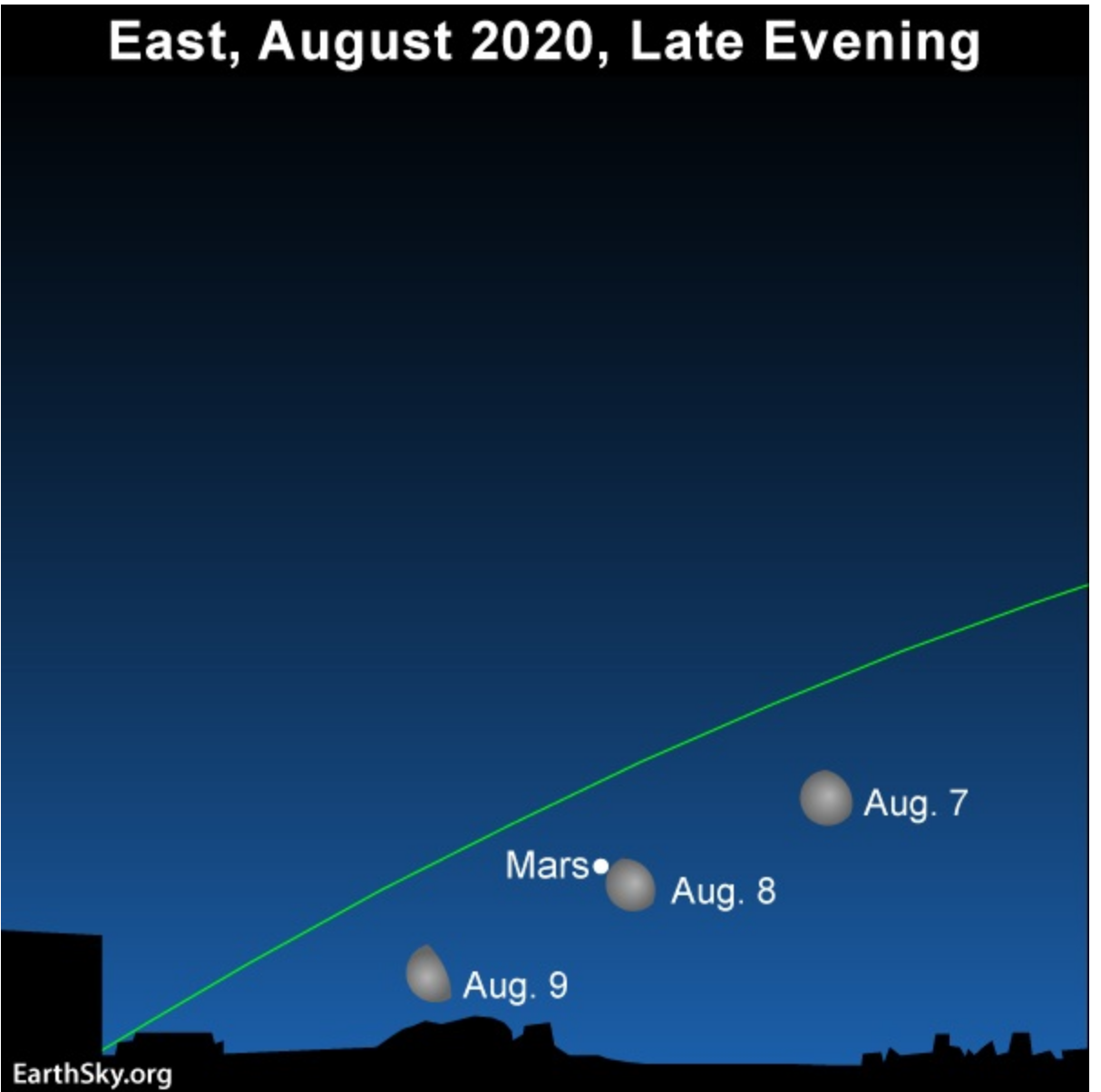
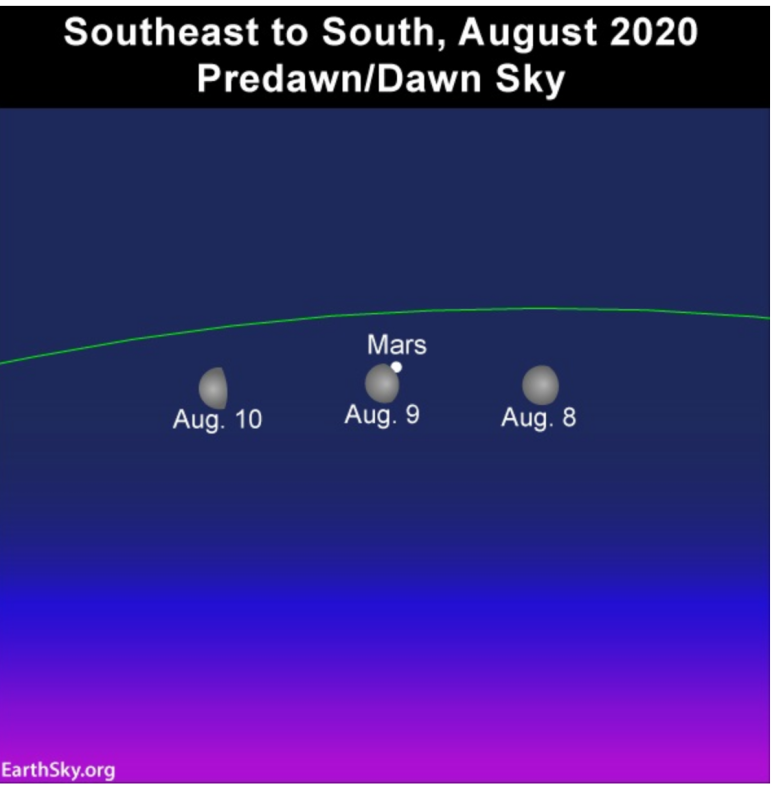
Saturday, Aug. 8: Moon, Mars and the “Great Andromeda Galaxy”
A week after passing close to the bigger outer planets, our satellite will pass close to the “red planet.” Try to catch the Mars-rise around midnight in the east (so, early on Saturday) and then look above to the northeast and you’ll be in the zone for the Andromeda Galaxy (M31). Scan with binoculars about halfway between the W-shaped five-star constellation of Cassiopeia and Mars/the Moon and you’ll see a fuzzy patch of ... one trillion stars.
Sunday, Aug. 9: Mercury and Venus before sunrise
If you’ve never seen the solar system smallest planet with the unaided eye, this morning offers a chance. Look just before sunrise in a north-easterly direction, though you may need binoculars to spot this tiny red dot of a world. Be careful not to point your binoculars at the Sun as it rises—that’s very dangerous. Venus should also be very easy to spot above along with bright stars Sirius further east.
Wednesday, Aug. 12 through Saturday, Aug. 22: ‘Galaxy window’ open
The center of our galaxy looks spectacular in August, but only when the Moon is down. So look during the week before Aug, 19’s New Moon, for a few nights after, to get a great view of the galaxy’s center from our position in its Orion Spiral Arm. Look generally south. You’ll also see Jupiter and Saturn on its eastern side.
Wednesday, Aug. 12 and Thursday, Aug. 13:
Milky Way, Perseids peak and Venus
You will see the Milky Way arc across the night sky before midnight and then witness the peak of the Perseid meteor shower.
It’s the year’s most popular display of “shooting stars” mostly because it occurs when people in the northern hemisphere are often outdoors a lot and camping. It peaks after midnight when shooting stars are possible, though this year that’s when a 35%-lit Moon will rise, which will bleach the night sky somewhat. However, you should be able to glimpse the brighter of the estimated 60 shooting stars per hour.
Stay up late enough and you’ll also see a very bright planet Venus appear in the northeast—tonight it will be at its greatest separation west from the Sun.
Stories Posted This Week
Thursday, October 8, 2026
- Ada Icon headlines on Thursday, October 8
- St. John Bible Church to host "Refocus on Purpose" workshop
- Royal riches: Gout
- October 8 Bluffton Schools athletics lineup, streaming
- Has Bluffton made a birder out of you?
- BPL Afterschool activity: Curious Kids Club
- Book and pizza tasting at Bluffton Public Library
- Final 50 for 250 performance at BPL
- Walking through the Suter Corn Maze
- Resident feedback sought for Regional Transportation Plan
- Bluffton University honors three for service, achievement and leadership
Wednesday, October 7, 2026
Tuesday, October 6, 2026
- Bluffton Area Chamber of Commerce monthly meeting, Friday, Oct. 9
- Fire extinguished at SRK Industries, plant resumed operation same day
- Bluffton girls tie Grove in NWC showdown
- Pirate volleyball falls to powerhouse Patriots
- BHS GOAT: Latin teacher Margaret Weaver
- Library patrons invited to showcase their collections or causes
- September 2026 land transfers in the Bluffton school district
Monday, October 5, 2026
Sunday, October 4, 2026
- Bluffton Fire Dept. extricates passenger following I-75 crash
- Crumrine leads October 8 Watercolor Workshop
- MCHO opportunities to trick or treat, donate candy
- ALA Banned Books Week
- Pirate boys soccer blanked by Celina
- Hancock Public Health confirms measles case in Findlay
- Timeline for October 10 Dillinger robbery reenactment and motorcycle show