






















A tannery in Bluffton at the corner of Jefferson and Mound

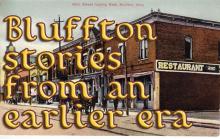
Note: The Icon acquired a manuscript titled “A Brief History of Bluffton’s Industrial Developments.” This publication was prepared by the classes in Marketing and Small Business Administration from Bluffton College, under the director of Dr. Howard Raid. Publication date is May 1959. We’ve updated some current addresses so viewers may identify locations.
The tannery - owner – Silas Agin
One of Bluffton’s pioneer industries in the 1800s was a tannery. This industry, owned and operated by Silas Agin, also the son of a tanner, was located at Jefferson and Mound streets.
Silas, with the help of his son and other men, operated six days a week, usually 12 hours a day.
The tannery was a large operation for its day. There were 24 vats used, each six feet square and six feet deep. These were constructed of 2 by 12 oak planks housed in the tannery building.
Hides were brought from miles round. Practically all the hides cured and tanned were shipped to outside sources, usually Cleveland and Chicago. A buyer would stop each two or three weeks and buy hides, hauling them in a wagon or to the railroad.
There was little demand locally for hides except in the years when A.G. Kibler shoe-making factory operated. Silas also used some of his hides to make harnesses.
Thousands of hides were treated each season. Oak bark ground into fine dust was used as the tanning agent. Hides soaked in the water-filled vats, with layers of oak bark above and below each hide. A small amount of lime was also added to the water.
Following this treatment, which took several days, the hides were pulled onto huge rollers from powerful windlasses mounted on each vat. This way, the skins were pressed and dried.
As a sideline to this story, people frequently complained about the terrible oders caused by the chemical reaction at the tannery. Silas is said to counteract these complaints by saying that it was the graveyard located next to the tannery that gave off the disagreeable odor.
With the development of new and cheaper methods of tanning hides and the expansion of the railroads and roads, tannery business volume declined around the end of the 1880s.
The tannery closed around 1890 and Silas sold the building to T.P. Johnson, who operated a poultry house there for several years.
Interviewer: Clark Wetzel
Information sources: Wilhelm Amstutz, Fred Hahn and Paul Clark
April 30, 1959
Stories Posted This Week
Monday, October 12, 2026
Sunday, October 11, 2026
Saturday, October 10, 2026
Friday, October 9, 2026
- Ada Icon headlines, October 9
- Pirate girls soccer loss vs. St. Marys
- Pirate volleyball sweeps Carey
- “The Trumpet Player” sculpture at Bluffton University receives conservation grant
- October 9 Bluffton Schools athletics lineup, streaming
- Plenty of action at Oct 10 Dillinger robbery reenactment and motorcycle show
- Caitlyn Couch junior piano recital, October 16
- Bluffton community survey opens for Active Transportation Plan
Thursday, October 8, 2026
- Ada Icon headlines on Thursday, October 8
- St. John Bible Church to host "Refocus on Purpose" workshop
- Royal riches: Gout
- Has Bluffton made a birder out of you?
- BPL Afterschool activity: Curious Kids Club
- Book and pizza tasting at Bluffton Public Library
- Final 50 for 250 performance at BPL
- Walking through the Suter Corn Maze
- Resident feedback sought for Regional Transportation Plan
- Bluffton University honors three for service, achievement and leadership